
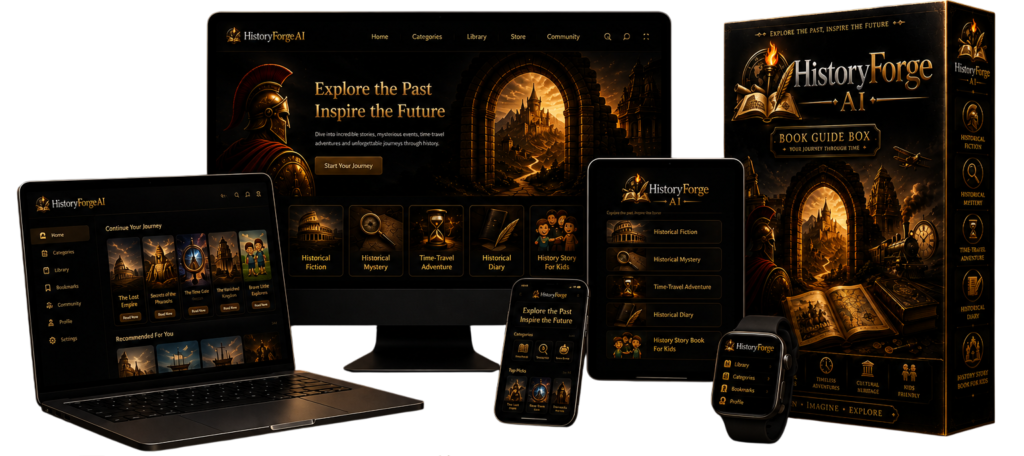
History Forge AI Review 2026 + OTOs, Coupon & $39,000 Bonus
Finding a good AI tool for creating history content is not always as simple as it sounds. I remember looking at different tools and trying to understand which ones could actually help with research, story ideas, visuals, and content creation. Many tools can do one small job, but then you need another tool for the next step.
That is one of the reasons why History Forge AI caught my attention.
Instead of jumping between different tools to plan historical content, create ideas, build stories, and organize everything separately, History Forge AI brings several parts of the process together. For beginners, this can make things feel much less confusing.
What I noticed about this offer is that it is built around creating historical stories and content. It is designed as a 5-in-1 historical storytelling studio, with a workflow that moves from Foundation to Blueprint, Map, and then Create. Having this kind of step-by-step process can be helpful when you don’t really know where to start.
Another thing I liked is that the whole idea doesn’t seem too complicated. When you’re new to creating content, having too many separate tools and options can become confusing very quickly. A more organized workflow can make it easier to take an idea and turn it into something you can actually work with.
Just think about the different parts involved in making historical content. You may need to develop the basic idea, plan the story, organize the information, work with maps, and then create the final content. Doing all these parts separately can take plenty of time and effort.
History Forge AI aims to bring these steps into one place. So instead of constantly switching between different tools, you can work through its different stages and build your project step by step. For someone just starting out, that sounds pretty useful.
Of course, the important part is figuring out whether History Forge AI really offers enough value for the price. A product can have plenty of features, but that doesn’t automatically mean it is the right choice for everyone.
That’s exactly what I wanted to look at in this History Forge AI Review 2026.
In this review, I’ll go through what History Forge AI offers, how its main workflow works, the available pricing and offer details, bonuses, OTOs, and who may find this product useful. I’ll also look at the overall offer so you can get a better idea of what you’re actually getting before buying it.

History Forge AI Review 2026 – Overview

| Creator | PintuBachhar |
| Product | History Forge AI |
| Launch Date | 2026-08-29 |
| Launch Time | 09:00 |
| Official website | CLICK HERE |
| Front-End Price | $16.95 |
| Bonuses | Yes, Huge Software Bonuses >>Check Below<< |
| Skill | All Levels |
| Guarantee | 30-Day Money Back Guarantee |
| Niche | Chatgpt |
| Support | Еffесtіvе Rеѕроnѕе |
| Recommend | Highly recommend! |
Now that we have covered the basic overview of History Forge AI, it’s time to look a little deeper at what this product actually offers.
In the next parts of this review, I’ll go through the main features, how the different parts work, the pricing, bonuses, and any available upgrades. This should give you a clearer idea of what you are getting before making a decision.
After all, nobody wants to buy a product and then realize they don’t really understand what is included. It is always better to look at the details first and see if the offer makes sense for your needs.
So, let’s get into it and see what History Forge AI brings to the table.
History Forge AI Review: Explore an AI-Powered Historical Storytelling Studio

Many people spend a lot of time trying to create interesting history content. Coming up with a good topic is one thing, but planning the story, organizing the details, working with maps, and turning everything into finished content can take much more time than expected.
That is where History Forge AI comes in.
Instead of handling every part of a historical storytelling project separately, this product brings different stages together in one place. It is presented as a 5-in-1 historical storytelling studio, designed to help users move from an initial idea toward a finished creation through a structured workflow.
The process is built around different stages, including Foundation, Blueprint, Map, and Create. This can make things easier for people who don’t have much experience with this type of content. Rather than staring at a blank page and wondering what to do next, you have a process to follow.
Whether you are interested in creating historical stories, planning history-based content, or simply want a more organized way to work on your ideas, History Forge AI is built around making those steps more manageable. For beginners, having everything arranged in one workflow can be pretty helpful.
Summary
History Forge AI is a 5-in-1 historical storytelling studio made for creating and developing history-based content through a guided workflow.
The product takes users through stages such as Foundation, Blueprint, Map, and Create. Each stage is intended to help with a different part of the storytelling process, so you can move from the starting idea toward the final creation without handling every step completely separately.
For beginners and people who want to work with historical storytelling, this can provide a more organized way to approach their projects. Instead of trying to figure out the whole process at once, you can work through the different stages one by one.
Overall, the main idea behind History Forge AI is pretty straightforward: bring several parts of historical storytelling together and make the process easier to manage.

History Forge AI Review 2026 – Features and Benefit
History Forge AI Features
Here are some of the main things you can do with History Forge AI:
Work with a 5-in-1 historical storytelling studio from one place.
Develop historical content through a more organized workflow.
Start with the Foundation stage to build the base of your project.
Use the Blueprint stage to plan and shape your historical story.
Work with the Map stage as part of the storytelling process.
Move toward the Create stage to develop the final content.
Keep different parts of your historical storytelling workflow connected.
Spend less time trying to figure out what step should come next.
Organize your ideas before turning them into the final creation.
Follow a structured process instead of handling every part separately.
Build historical storytelling projects step by step.
Use the different stages based on where you are in your project.
Make the storytelling process feel more organized.
Helpful for people interested in creating history-based content.
Designed to make the process easier to follow, especially for beginners.
Benefits of History Forge AI
Follow a Clear Storytelling Process
Creating historical content can become confusing when you don’t have a clear process. History Forge AI uses different stages to help organize the work.
Instead of trying to handle everything at once, you can move through the workflow step by step. This makes the whole thing feel a bit easier to manage.
Start With the Foundation
Every project needs a starting point. The Foundation stage gives you a place to begin working on your historical storytelling project.
This can be useful when you have an idea but aren’t sure how to turn it into something more organized. Starting with the basics can make the next steps easier.
Plan With the Blueprint
After the foundation comes the Blueprint stage. This part is focused on shaping and planning the project before moving further.
Having a planning stage is useful because you don’t have to rush straight into creating the final content. You can first get your ideas into better shape.
Work With Maps
History and locations often go together. History Forge AI includes a Map stage as part of its storytelling workflow.
This gives the process another part to work with instead of focusing only on the written story. It can help keep the project organized as you move through the different stages.
Create Your Final Content
Once you have worked through the earlier stages, the workflow moves toward Create.
This gives you a clear point where the different parts of your project come together. For beginners, having a final creation stage can make the process feel more complete.
Keep Things More Organized
Working on historical content can involve many different ideas and steps. Without some kind of structure, it can get messy pretty fast.
History Forge AI brings its main stages into one workflow. Therefore, you can focus on one part at a time instead of trying to manage everything together.
Helpful for Beginners
Getting started can be one of the hardest parts when you are new to historical storytelling. You may have ideas, but knowing what to do with them is another story.
The step-by-step structure of History Forge AI can give beginners a simpler way to approach the process. You don’t have to figure out every stage from scratch.
Reduce the Need to Switch Between Steps
When different parts of a project are handled separately, it can take more effort to keep everything connected.
History Forge AI puts Foundation, Blueprint, Map, and Create into its overall workflow. That means the process is arranged in a way that can be easier to follow.
Turn Ideas Into Organized Projects
Sometimes an interesting history idea is easy to think about but harder to develop. Having a structured workflow gives you different stages to work through.
You can start with the basic foundation, develop the blueprint, work with the map, and then move toward creation. It is a simple approach, but it can make a difference.
A Single Place for Historical Storytelling
One of the main ideas behind History Forge AI is bringing several parts of historical storytelling together.
Instead of treating each part as a completely separate task, the product combines them into a 5-in-1 studio. For people who prefer having an organized workflow, this can be a useful approach.
The points above give you a quick look at what History Forge AI brings to the table and how its 5-in-1 historical storytelling workflow can help organize the content creation process. The idea is pretty simple, which can make it easier for beginners to understand and use.
Now, let’s move to the next section of this History Forge AI Review, where we’ll take a closer look at the pricing, available upgrades, bonuses, and what you get with the main offer.
This way, you’ll have a better understanding of the complete package before deciding whether History Forge AI is the right fit for your needs.

History Forge AI Review 2026 – How Does It Work?
How History Forge AI Works
One thing that stands out about History Forge AI is the way the product organizes the historical storytelling process. Instead of trying to handle every part at the same time, the workflow is divided into different stages.
You don’t need to figure out the whole project in one go. You can move through the process step by step, which makes things less confusing, especially when you’re still getting started.
Here is the basic workflow:
Step #1: Start With the Foundation
The first stage is Foundation. This is where you begin building the base of your historical storytelling project.
Starting with a foundation gives you a place to develop the main idea before moving into the other parts. It keeps the beginning of the process more organized.
Step #2: Build the Blueprint
Next comes the Blueprint stage. Here, you can work on shaping and planning the historical story you are creating.
This step is useful because you can focus on the structure of your project before moving ahead. Sometimes having a plan first just makes everything feel easier.
Step #3: Work With the Map
The next part of the workflow is Map. History can involve different places and locations, so this stage is included as part of the overall storytelling process.
Having a dedicated map stage gives you another way to develop your project rather than focusing only on the story itself.
Step #4: Move Toward Creation
After working through the earlier stages, you reach the Create stage.
This is where the different parts of your project come together as you work toward the final creation. By this point, you have already gone through the foundation, planning, and map stages.
Step #5: Build Step by Step
The main idea behind History Forge AI is to follow the workflow rather than trying to do everything at once.
You move from Foundation → Blueprint → Map → Create, giving each part its own place in the process. This can make historical storytelling feel more manageable for someone who is just learning.
The workflow is pretty straightforward. You start with the foundation, shape the project with the blueprint, work with the map, and then move into creation.
For beginners, this kind of structure can be helpful because you have different stages to follow instead of trying to work everything out on your own. It doesn’t make the process magically easy, but it can make it feel more organized.
History Forge AI Review 2026 – My Experience Using It?
My Experience With History Forge AI
I recently spent some time going through History Forge AI to understand what it actually offers and how the overall process is put together. After looking through the details, I found that the main idea is pretty simple.
Instead of trying to handle every part of a historical storytelling project separately, History Forge AI brings the process into a 5-in-1 historical storytelling studio.
A lot of people can face similar problems when working on history content.
What if I have a good history idea but don’t know how to develop it?
What if planning the story becomes confusing?
What if I need to work with maps as part of the project?
What if I don’t know which step should come next?
This is where a structured storytelling workflow can be helpful.
Rather than starting with a blank page and trying to figure everything out at once, you can work through different stages. For beginners especially, having a process to follow can make the work feel less overwhelming.
One thing I noticed is that the workflow is easy to understand. It moves through different stages, starting with Foundation, then Blueprint, Map, and finally Create.
That step-by-step approach makes sense because you can focus on one part before moving onto the next. You don’t have to throw everything together at the beginning.
What Can You Use History Forge AI For?
The product is built around historical storytelling, and its different stages can be used as part of developing history-based projects.
Some of the main areas include:
Building the foundation of a historical story
Planning the story with the Blueprint stage
Working with maps
Organizing different parts of a storytelling project
Moving from an initial idea toward creation
Developing historical content through a structured workflow
Keeping the storytelling process in one 5-in-1 studio
Because the workflow covers several stages, different users may approach their projects in different ways.
Why Does a Structured Storytelling Workflow Matter?
Let’s be honest. Starting a content project without a clear direction can get frustrating.
You may have an interesting historical idea, but then you have to think about what comes next. Should you plan it first? How should you organize it? Where does the map fit in? And when should you actually start creating?
Without some structure, these little things can slow you down.
History Forge AI puts different stages into one workflow. Therefore, you can move through the project in a more organized way instead of trying to solve everything at once.
It may not remove all the work, of course. But having a clear path can make the process easier to understand.
My Opinion
For people interested in historical storytelling, History Forge AI could be a useful tool to consider.
The biggest thing I noticed is the organized workflow. The Foundation, Blueprint, Map, and Create stages give the project a clear direction, which can be especially helpful for beginners.
I also like that the product is presented as a 5-in-1 historical storytelling studio. Having these different parts connected can make the process feel less scattered.
Of course, History Forge AI isn’t going to do all the thinking for you. You still need to work on your ideas and actually create the project. A tool can help with the process, but the person using it still has to put in the effort.
Still, if you want to work on historical storytelling and prefer having a structured process to follow, History Forge AI may be worth looking at.
The main value, in my opinion, comes from having the different storytelling stages organized together. For someone who doesn’t know where to begin, that can be a pretty useful starting point.
Pros and Cons
History Forge AI Pros and Cons
Like most digital products, History Forge AI has some clear advantages and a few things you should keep in mind before purchasing. After going through the product details, here is my personal take.
Pros
✔ Uses a 5-in-1 historical storytelling studio
✔ Brings different storytelling stages into one workflow
✔ Beginner-friendly structure that is easy to understand
✔ Helps organize the process of creating historical stories
✔ Includes Foundation, Blueprint, Map, and Create stages
✔ Gives you a step-by-step way to approach a project
✔ Helps you work on different parts of a historical story in order
✔ Includes a dedicated Map stage within the workflow
✔ Can make the storytelling process feel less confusing
✔ Useful for people interested in history-based storytelling
✔ Gives you a clear path from an initial idea toward creation
✔ Keeps several parts of the storytelling process connected
What Problems Does It Help Solve?
Not knowing where to start with a historical storytelling project
Having a history idea but struggling to organize it
Trying to handle different storytelling stages separately
Getting confused about what step should come next
Finding it difficult to plan a historical story
Needing a more structured approach to storytelling
Trying to include maps as part of a history project
Feeling overwhelmed when starting a new project
Working on historical content without a clear workflow
Cons
✘ You still need to bring your own ideas and effort to the project
✘ People looking for something outside historical storytelling may not find it useful
✘ The value you get depends on how you use the different stages
My Thoughts
Honestly, I like the simple idea behind History Forge AI. It doesn’t try to make the concept overly complicated. Instead, it puts the historical storytelling process into different stages that are easier to understand.
The 5-in-1 approach is probably the biggest advantage for me. Having Foundation, Blueprint, Map, and Create as parts of the workflow gives you a path to follow.
Of course, simply having access to a storytelling studio doesn’t mean a great project will appear by itself. You still need to work on your ideas and put some effort into the process. That’s just how it goes.
However, if you are interested in historical storytelling and don’t want to figure out every stage completely on your own, History Forge AI could be worth considering.
The main thing is to use the workflow properly. Start with the foundation, build your blueprint, work with the map, and then move toward creating your final project. It sounds simple, but sometimes simple is exactly what you need.
Who Is History Forge AI For?
History Forge AI can be useful for different types of people who are interested in historical storytelling. If you want to develop history-based projects and prefer having a structured process to follow, there is a good chance you may find the workflow useful.
History Content Creators
People who create history content may find the 5-in-1 storytelling studio helpful. Instead of treating every part of a project separately, you can work through the different stages in the workflow.
Historical Storytellers
If storytelling is your main interest, History Forge AI is built specifically around that idea. The Foundation, Blueprint, Map, and Create stages give you different parts to work through as you develop your project.
Bloggers
Bloggers who focus on history may find value in having a more organized way to develop historical stories. Starting with a foundation and then moving through the other stages can help keep the project moving.
Content Creators
Creating content regularly can become confusing when you don’t have a clear process. History Forge AI gives content creators a structured workflow they can follow when working on historical storytelling projects.
Beginners
This may be one of the more interesting groups for History Forge AI. Beginners can sometimes get stuck simply because they don’t know where to start.
The step-by-step structure can make the process easier to understand. You can work through the different stages instead of trying to figure everything out at the same time.
People Working With Historical Ideas
Sometimes you already have an interesting historical idea, but turning that idea into a proper project is the harder part.
History Forge AI can give you a workflow to work through. You can begin with the Foundation stage, develop the Blueprint, work with the Map, and then move toward Create.
People Who Like Organized Workflows
Not everyone likes working from a completely blank page. Some people prefer having a clear process that tells them what part to focus on next.
For those users, the 5-in-1 structure may be useful. The stages help separate the different parts of the storytelling process.
History Enthusiasts
People who enjoy working with historical subjects and storytelling may also find the concept interesting. The product is focused on bringing several parts of historical storytelling into one studio.
Anyone Who Wants a More Structured Process
At the end of the day, History Forge AI is mainly suited to people who want to work on historical storytelling with a more organized workflow.
You still need your own ideas and effort, of course. But instead of starting with no direction, you have different stages to work through.
If you are interested in history-based storytelling and want a 5-in-1 studio that brings Foundation, Blueprint, Map, and Create into one process, History Forge AI may be worth exploring.
Price and Evaluation
💸 Exclusive Discount & Bonus – History Forge AI Review 2026
Right now, History Forge AI is available at a low entry price, making it easier for beginners, writers, creators, teachers, and history lovers to try the product without a big upfront cost.
🎟️ Any available discounts or bonuses will be applied during checkout.
✔ Low-cost front-end offer
✔ 5-in-1 historical storytelling studio
✔ Suitable for beginners and experienced creators
✔ One-time payment with no monthly subscription
✔ Multiple optional upgrades available
✔ Useful for historical fiction, mysteries, time-travel stories, diaries, and kids’ history storybooks
📦 Front-End & OTO Breakdown – History Forge AI Review 2026
🔹 Front-End: History Forge AI
💲 $16.95 One-Time
This is the main History Forge AI offer. It gives you access to the core 5-in-1 historical storytelling studio and its main workflow.
The five storytelling engines include:
Historical Fiction
Historical Mystery
Time-Travel Adventure
Historical Diary
Kids’ History Storybook
The main workflow follows Foundation → Blueprint → Map → Create, helping users move from a simple idea toward a more organized historical story.
Perfect for:
Writers
History enthusiasts
Teachers
Parents
Students
Bloggers
Content creators
People who enjoy historical storytelling
👉 It gives you a structured way to work on historical story ideas without having to figure out the whole process from scratch.
🔓 One-Time Offers (OTOs)
🔹 OTO 1: History Forge AI OTO 1
💲 $27.00
This is the first optional upgrade available after the main History Forge AI offer.
✔ Additional features or resources
✔ Can expand the main product experience
✔ Useful for users who want more from the funnel
🔹 OTO 2: History Forge AI OTO 2
💲 $37.00
The second upgrade is available for users who want to add more to their History Forge AI purchase.
✔ Additional resources
✔ More options for your projects
✔ Suitable for active users
🔹 OTO 3: History Forge AI OTO 3
💲 $47.00
This is another optional upgrade for people who want to extend their overall History Forge AI package.
✔ Extra resources
✔ More flexibility
✔ Useful for users creating multiple projects
🔹 OTO 4: History Forge AI OTO 4
💲 $67.00
This is the highest-priced upgrade listed in this offer breakdown.
✔ Additional resources
✔ More project possibilities
✔ Designed for users who want the most from the available upgrades
⚡ Bundle Value
The front-end offer already gives users access to the main History Forge AI studio and its five dedicated storytelling engines.
Adding selected upgrades can give users more resources and options, depending on what they actually need.
For someone who only wants to create historical stories, the main offer may be enough. On the other hand, users who want extra features or resources can look at the optional OTOs before deciding.
🧠 Final Thoughts on Pricing
History Forge AI starts at $16.95, which makes the front-end offer fairly affordable for people who want to explore structured historical storytelling.
The main package includes five different storytelling engines, so users can work on historical fiction, mysteries, time-travel adventures, diaries, or kids’ history stories from one place.
For most beginners, I would suggest starting with the front-end offer first. You can understand how the workflow works before deciding whether any upgrade is actually useful for you.
The important thing is not to buy every OTO just because it is offered. Pick the upgrades that match your own projects and how you plan to use History Forge AI.
My Final Verdict on History Forge AI Review
Thank you for taking the time to read my honest History Forge AI Review. I hope this review has given you a clear idea of what the product offers, how the workflow works, its pricing, available upgrades, and who it may be suitable for.
After going through the details, I found that the main idea behind History Forge AI is quite simple. It brings several parts of historical storytelling into one 5-in-1 studio instead of making users figure out every stage on their own.
What I personally like most is the structured workflow. History Forge AI uses Foundation → Blueprint → Map → Create, so you have a clearer path from an initial story idea to creating the actual content.
For beginners, this can be especially helpful. Starting a historical story can feel confusing when you don’t know what to plan first or how to keep everything organized. Having a step-by-step process can make things feel a little easier.
Another useful part is that History Forge AI offers different engines for different types of stories. You can work on historical fiction, historical mysteries, time-travel adventures, historical diaries, or kids’ history storybooks.
If you regularly work with historical storytelling, blog content, educational stories, or creative history projects, having these different options in one place can save you from jumping between different processes.
Of course, History Forge AI is not a magic button that does everything for you. You still need your own ideas, judgment, and effort. Historical facts should also be checked when accuracy really matters. But having a clear workflow can make the creative process less confusing.
For the current front-end price of around $17, I think the entry cost is reasonable for someone who is genuinely interested in historical storytelling and wants to explore the five engines.
I would especially recommend History Forge AI to:
✔ Writers interested in historical stories
✔ History enthusiasts
✔ Bloggers and content creators
✔ Teachers and parents
✔ Students working with history projects
✔ Beginners who want a more structured process
✔ Creators who enjoy historical fiction and storytelling
✔ Anyone looking for different ways to turn history ideas into stories
If creating historical stories is something you want to explore, then History Forge AI may be worth taking a closer look at.
Just keep in mind that launch pricing, bonuses, and other special offers can change. So, if you’re already thinking about getting it, checking the current offer before making your decision would be a good idea.
Frequently Asked Questions
History Forge AI FAQ
1. What is History Forge AI?
History Forge AI is a 5-in-1 historical storytelling studio designed to help users create different types of history-based stories. It uses a structured workflow that moves through Foundation, Blueprint, Map, and Create.
2. Who is History Forge AI for?
History Forge AI can be useful for writers, history enthusiasts, teachers, parents, students, bloggers, content creators, and beginners who want to work on historical storytelling projects.
3. Do I need any special skills to use History Forge AI?
No advanced technical skills are required. The workflow is designed to be straightforward, so beginners can start with a simple story idea and move through the different stages.
4. What types of stories can I create with History Forge AI?
History Forge AI includes five dedicated storytelling engines. You can create historical fiction, historical mysteries, time-travel adventures, historical diaries, and kids’ history storybooks.
5. Is History Forge AI suitable for beginners?
Yes. Beginners can start with just a simple idea and use the Foundation, Blueprint, Map, and Create workflow to build their project step by step. You don’t need to figure out everything at once.
6. Can writers and content creators benefit from History Forge AI?
Absolutely. Writers and creators who enjoy historical storytelling can use the different engines to explore various story formats. The organized workflow can also make planning and developing ideas feel less confusing.
7. How does History Forge AI work?
The process starts with a Historical Foundation, where facts and inventions are identified. Next comes the Blueprint, followed by a project Map such as a story map, clue map, adventure map, or diary timeline. After that, you can use the Create stage to develop individual parts of the project.
8. How much does History Forge AI cost?
The front-end offer is currently available at a launch price of around $17 as a one-time payment. Optional upgrades may also be offered during the purchase process.
9. Are there any OTOs or upgrades available?
Yes. There are optional One-Time Offers available in the funnel. These upgrades are not required to use the main History Forge AI product, so you can decide based on your own needs.
10. Is History Forge AI worth it?
If you enjoy historical storytelling and want a more organized way to develop fiction, mysteries, time-travel stories, diaries, or kids’ history stories, History Forge AI may be worth considering. The main value is having several storytelling engines and a structured process in one place.
Recommended Products You May Also Like
Infinite Money Loop Review 2026: Legit Crypto System or Scam?
If you’re curious about cryptocurrency and automated income systems, Infinite Money Loop is worth exploring. The product claims to simplify parts of the crypto process for everyday users. It’s designed for people looking to learn more about digital assets and alternative online income opportunities.
336 Prompts to Create Complete Romantasy Sagas Review 2026
Writers and content creators may find this prompt collection useful. It provides a large number of prompts designed to help users create romantasy stories, characters, plot twists, and complete book ideas. It’s especially helpful for authors who sometimes struggle with writer’s block.
Cozy Co-Author Review 2026: AI Novel System Exposed
Cozy Co-Author is aimed at people who want help creating cozy mystery novels and fiction content. It offers tools and resources that can speed up the writing process and help generate ideas for stories, characters, and chapters.
Wizmo’s Mega Kids Activity Pack Review (2026 Guide)
For anyone interested in creating educational or printable products, Wizmo’s Mega Kids Activity Pack provides a collection of activities designed for children. It can be useful for teachers, parents, publishers, and digital product sellers looking to expand their product range.
Adventure AI Review 2026: Features, Pricing & Demo
Adventure AI focuses on helping users generate content and creative materials with the assistance of artificial intelligence. It may appeal to marketers, content creators, bloggers, and entrepreneurs who want to create content faster while exploring new ideas for their projects.
These products cover different niches and use cases, so depending on your goals, one or more of them could be a good addition to your digital business toolkit.
Follow Us on